Sunday, 19 November 2006

Pork Crackling


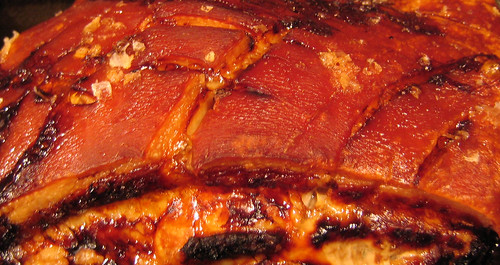
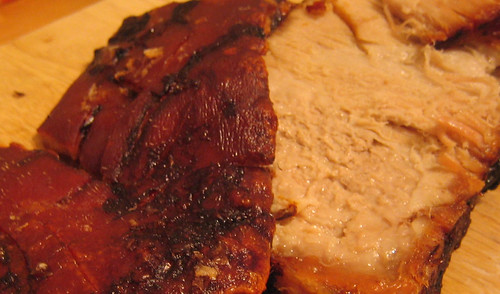
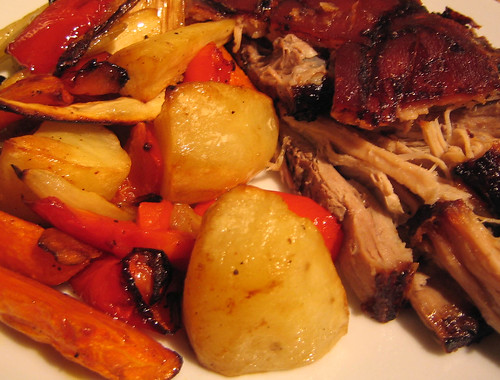
As much as I love roast pork I never used to eat the crackling - the thought of fatty pig's skin didn't really do it for me! I have to admit to feeling a little disgust when Rob used to chew on it. When he told me I was missing out on the very best bit I was a somewhat disbelieving. But now I've tasted golden, crispy crackling I'm a complete convert. The flavour is fantastic and it's great to crunch on. BUT, if it isn't crispy you just get a mouthful of fat. Nice.

I've noticed, when checking my blog stats to see how people are finding my blog, that there are a lot of people out there on a quest for crispy crackling. So to maybe help those people, here are my tips.

The key is dryness and heat. The skin should be scored to release the fat and help dry it out – get your butcher to do the scoring as the skin is really tough. When you get it home dry the skin off with kitchen paper and then rub salt into it to further dry it out.

Pork belly, which we had tonight, is best slowly roasted, and you need a low temperature for that, but you need a high temperature to crisp up the crackling. So, give it a really high blast of heat for half an hour either at the beginning of your cooking time or at the end, with the time in between at a low temperature.

I find the meat at the bottom of the joint, which is laying on the roasting tin, can become too dry if it is cooked for too long at too high a heat so it’s sometimes a good idea to add a glass of water or wine during the last hour of cooking to prevent this.

If you find the joint is cooked through but the crackling isn’t crispy enough you can always remove the skin from the joint and put the skin back in the oven at a high temperature to really crisp it up. It’s really fine to do this - the crackling usually separates from the joint during carving anyway.

Oh, one final thing. There is one downside to this naughty treat and that would be an aching jaw. But hell, it's worth it.


Friday, 17 November 2006

Ask Me A Question


(Photography by Gene Weatherley)

I'd love for this blog to become really interactive so that you, the reader, can contribute and tell me what you think and what you'd like to know.

So, I thought I'd create this area for you to ask me a question or tell me what you'd like to read about.

I'm no expert and completely self-taught, but if you'd like to ask me a cooking question please do and I'll do my best to answer, or if you have a dilemma I'll try to help you out.

Just post a comment against this post. Hope to hear from you soon!

Simple Pleasures

Ahhh…another Friday night, at last. Home from work, feet up, Dirty Dancing in the DVD player and a glass of chilled white wine by my side. It doesn’t get much better than this, does it? Well…actually….it does.

Ladies and gentlemen, I have something very good going on in the kitchen. My favourite thing to cook and eat is in the oven – a chicken, free range, of course. I’m pot roasting it tonight, which is so good yet so very simple and, most importantly for a Friday night, a quick bung-it-in-the-oven job.

Although there are hundreds of recipes out there for this very old dish you really don’t need one. It’s just a case of putting the chicken in a pot and adding chopped vegetables of your choice (onions, leeks, carrots, potatoes, are all good choices), fresh herbs, seasoning, water and some wine if you like. It goes into the oven at around 190 or 200 degrees with the lid on for about an hour, then about another half hour with the lid off to brown up the chicken. As usual with chicken check that the juices run clear and then you know it’s cooked through.

If you haven't already, try it - it's really good. You get moist chicken with a soothing broth. Lovely for this time of year in particular.

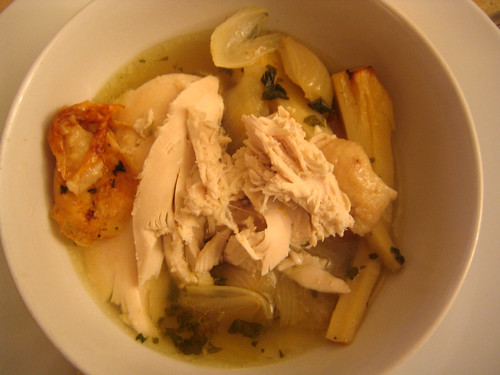
Here are some pictures I took last time I pot roasted a chicken.


Monday, 13 November 2006

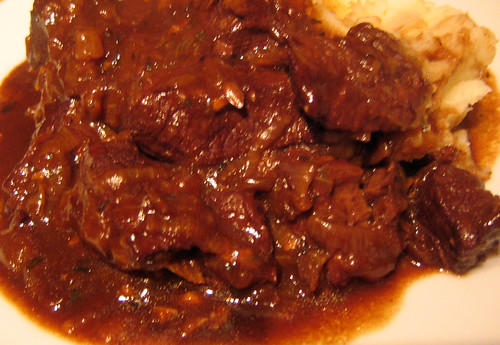
Beef With Port And Red Onion


Sauté about 500g of good casserole beef in olive oil over a high heat until well browned. Remove the beef from the pan then sauté 2 sliced red onions in the same pan until they start to soften and colour. Add 2 crushed garlic cloves and sauté for a couple of minutes more. Put the beef back in the pan and sprinkle over 1 tablespoon of flour. Stir well to mix then add a wine glass full of port and simmer for a few minutes to cook off the alcohol. Add 1 litre of beef stock, a little dried thyme and seasoning, then pop in the oven with a lid on at 200c for about two hours, until the beef is very tender and the sauce is thick and glossy. If the sauce needs thickening up towards the end of the cooking time, remove the lid and simmer the casserole on the hob.

This is a deliciously rich casserole and best served with something for the sauce to coat, such as mashed potato or rice.

Related Posts with Thumbnails