Tuesday, 4 March 2008

Chicken, Chorizo and Watercress Risotto

Chicken Chorizo and Watercress Risotto 2

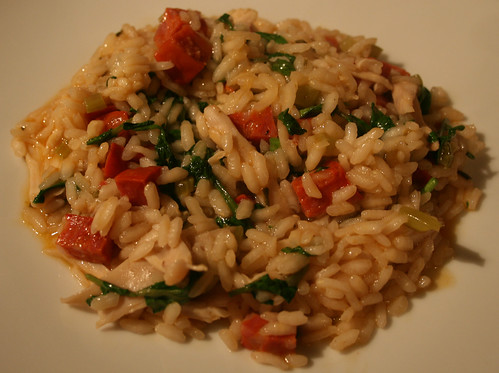
I was really very pleased with how this turned out when I put it together for dinner last night, using leftover roast chicken and stock from the carcass. Chicken and chorizo is a great combination anyway, and the base rosemary flavour was a very complimentary backdrop. Whilst there wasn’t a great deal of flavour from the watercress it gave a really good texture and colour to the dish.

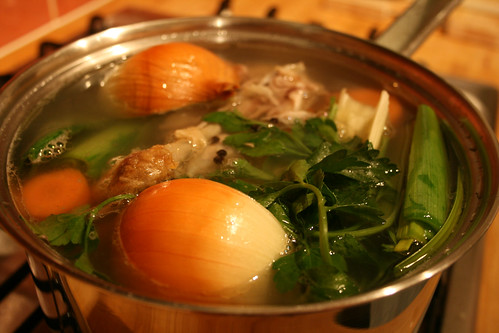
I really do think it’s worth taking the time and trouble to make your own chicken stock for this, and in fact any, risotto. The stock is what gives the rice so much flavour, and as the main ingredient in risotto, you really do want the rice to be packed full of flavour.

Whilst I’ve specified the amount of chorizo and chicken (yes, I actually weighed them just so I could tell you how much I used!), really just throw in a handful or two of each, roughly the same quantity. It probably is worth weighing out the rice because it can be deceiving and when it swells up you could end up with a lot more than you bargained for!

Chicken Chorizo and Watercress Risotto 1

Chicken, Chorizo and Watercress Risotto

Ingredients
150g Risotto rice
100g Chorizo sausage
100g Leftover roast chicken
A handful of watercress
1 spring onion
1/2 a stick of celery
1 sprig rosemary
About 500ml of hot Chicken stock – fresh if possible
A slosh of vermouth or white wine
A knob of butter
A little olive oil

1. Finely chop the spring onion and celery, and gently fry them in the butter and olive oil for a minute or so.
2. Dice the chorizo sausage and add it to the pan, frying it for about 3 minutes.
3. Next add the rice and stir it around to coat it well with the oil that will have seeped out of the chorizo. Fry it for a minute or so.
4. Add a slosh of vermouth or white wine to the pan and allow it to sizzle so the alcohol burns off.
5. Chop the leaves from a sprig of rosemary very finely and add to the pan.
6. Start adding the stock, a ladle full at a time, stirring the rice continually so that it absorbs the stock. Wait for the rice to absorb one ladle full before adding another.
7. About half way through add in the roast chicken.
8. Once the rice is creamy and al-dente (softened but with a ‘bite’ in the middle) and the chicken is heated through take it off the heat and serve.

Serves 2

Chicken Chorizo and Watercress Risotto 3

Sunday, 2 March 2008

Orange and Rhubarb Jelly

Orange and Rhubarb Jelly

This was my second attempt at making this jelly. The first time the jelly set, but wasn’t firm enough, and the orange overpowered the taste of the rhubarb. I used more gelatine this time, which gave a better consistency, and less orange juice and no zest, so the flavours were more balanced.

Even though I only used the juice from the rhubarb there was no waste as I used the pulp for a deliciously naughty rhubarb fool!

Rhubarb Fool

Orange and Rhubarb Jelly

Ingredients
500g rhubarb
Juice of half an orange orange
Approximately 150g caster sugar
3 Gelatine leaves
50ml of Cointreau

1. Chop the rhubarb into equal sizes and add to a pan along with the sugar and orange juice. Cook over a low heat for about 20 minutes, until the rhubarb is soft and has released its juices.

2. Take off the heat and strain it through a sieve. Once it's strained stir in the Cointreau and then taste the mixture – you may want to add more sugar, Cointreau or orange juice.

3. Soak the gelatine leaves in water for a few minutes then add them to the rhubarb liquid and stir to dissolve.

4. Pour the liquid into glasses or jelly moulds and allow to cool before putting into the fridge to set.

Look out for February’s ‘In the Bag’ round-up next week, for lots more rhubarb and orange recipes.

Wednesday, 27 February 2008

The Full English Breakfast (or the big fry up!)

Full English Breakfast 1

Over at The Goosberry Fool Caitlin is running an ingenious food blog event – The Global Breakfast Tournament. She wants to know who around the world makes the best breakfast and in order to find out has asked champions from different countries to enter a classic dish from their country. I’m very excited and honoured to be representing England in the tournament and I wanted to share my entry with you, which you can also read on Caitlin’s blog here. I hope you enjoy it!

Global Breakfast Tournament - England

I was delighted when Caitlin asked me if I would represent England in her Global Breakfast Tournament and immediately I knew the dish I would have to enter would be the Full English Breakfast, or 'the fry up' as it's also known. We're very lucky in Britain to enjoy a wide range of breakfasts from around the world, whether a croissant and latte grabbed on the way to the office, a bowl of muesli or even kedgeree. Toast and a cup of tea features heavily in British homes at breakfast time, as does cereal, but ask most Brits what the ultimate breakfast is here in the UK and the answer will be a resounding 'the fry up!'. Now I know what you're thinking: "Greasy, artery-blocking, heavy fried breakfasts served in greasy spoon cafes, well they may be classically British but what's so great about them?". Well, read on!
Full English Breakfast 2

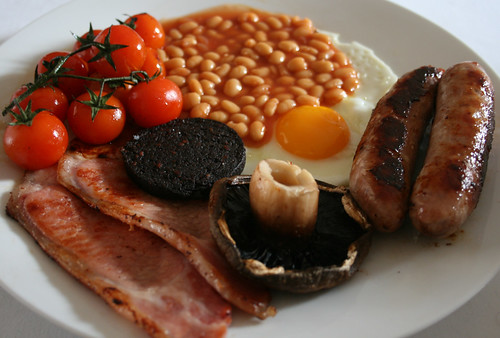
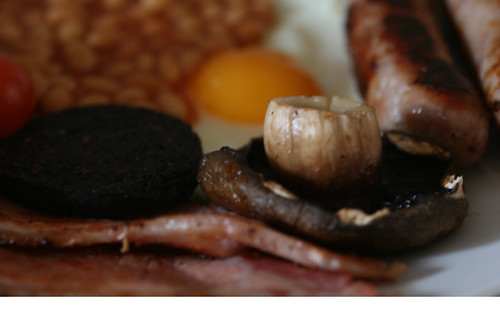
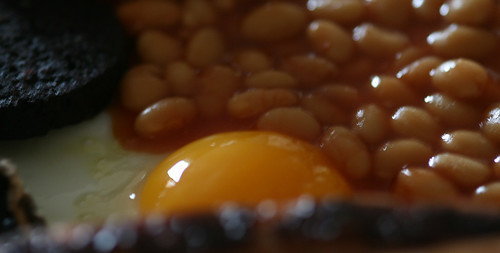
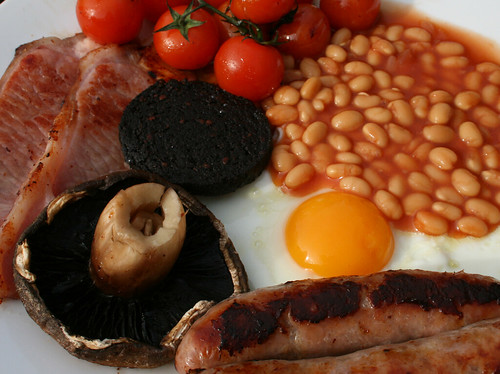
The great British fry up has regional variances across the UK; in Ireland you may find white pudding or soda bread, in Scotland haggis or potato scones are often included and in Wales lava bread may feature. But regardless of where you are in the UK, at the heart of this fantastic breakfast you'll pretty much always find bacon, eggs and sausages. Being from England, I've cooked the Full English Breakfast for my entry. After the bacon, eggs and sausages, generally any combination of mushrooms, eggs, tomatoes, hash browns, baked beans, fried bread and black pudding are added, sometimes with toast on the side for the very hungry. Eggs are sometimes scrambled, but more commonly fried and served runny, and you can't beat the delight of that first burst of the egg as you dip a piece of sausage or toast into that gloriously yellow yolk. In my research for this entry I've found that black pudding is something of a contentious issue. Many people insist that a full English breakfast must include it but quite a few people really dislike it and many don't even get as far as trying it, being repulsed by the idea of a sausage made from blood. I have to say I don't usually include it in my breakfast, but as I continued my research and spoke to various people it soon became very apparent that I would be committing blasphemy of the gravest kind if I didn't include it for this post. So I made an exception and there it is, right next to the bacon, tomatoes and beans!

As always, the best ingredients will give the best dish. If you use poor quality ingredients you'll get a poor quality breakfast, simple. So choose large free-range eggs, preferably organic, fresh ripe tomatoes, flavoursome mushrooms, thickly cut bacon and good quality black sausage from your butcher. And now for a few rules, meant light-heartedly but taken seriously by many: baked beans must be Heinz baked beans; sausages must be British, fat and juicy; and whether you prefer brown sauce or tomato sauce the choice can only be between Heinz ketchup and HP sauce.
Full English Breakfast 3

Let's talk about fat content for a minute. Now I do concede that the Full English isn't the healthiest of breakfasts, not by a long shot, and if you eat it every day you're going to pile on the pounds and give your arteries a challenge. But it really isn't eaten every day by your average Brit. It's something to be enjoyed in moderation, a real treat, generally eaten on an occasional weekend when there is more time to potter in the kitchen and really enjoy this hearty breakfast, or when staying in a hotel or bed and breakfast somewhere across the country. Those very concerned about the fat content could grill instead of fry, and many people do, but if you're looking for true authenticity only the frying pan will do. You don't need much fat for frying at all - some will come out of the bacon and sausages, and olive oil is a good choice, being healthier than most fats. After frying place the bacon and sausages on kitchen paper to soak up the excess fat before serving it.

So just what is it about this part of the British institution that makes it so special and dear to the hearts of so many Brits? Well let me see, could it be the gentle sound of the sizzling in the pan, the smell of the bacon and sausages making your tummy ache, or the oozing yellow egg yolk? Maybe it's the taste of the mushrooms or the sweet, warm tomatoes that burst in your mouth, or the taste combinations, different with each mouthful. Could it be the way this hearty breakfast fills your tummy, warms you up and puts a contented smile on your face as you read the Sunday papers? Or perhaps it's the fact that this breakfast reminds us so much of home and makes us proud to be British; after all, whilst there are many fantastic breakfasts all around the world, no one can do a fried breakfast like the British. Whatever it is, I really don't think that there's a better way to start the day.
Full English Breakfast 4

Sunday, 24 February 2008

First Taste of the New Season

Purple Sprouting Broccoli with Scrambled Duck Eggs and Chives 1

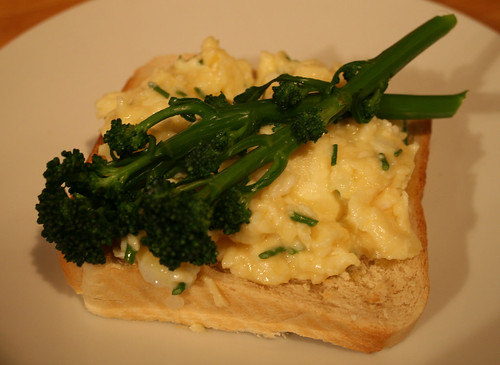
What an absolute delight; my first purple sprouting broccoli of the year. I picked it up from my local farm shop today and combined it with softly scrambled duck eggs and chives on toast for a late afternoon snack, washed down with a chilled glass of Sauvignon Blanc. An embodiment of Spring in one meal.

The mildly onion flavour of the chives balances out the rich duck eggs and the deliciously fresh tasting purple sprouting broccoli gives contrasting texture, having been blanched in boiling water for just a few minutes. A very light sprinkling of sea salt brings out the broccoli's flavour. This dish is perfect evidence that good quality, seasonal ingredients need only be cooked in the simplest of ways for stunning results.

Purple Sprouting Broccoli with Scrambled Duck Eggs and Chives

Ingredients
2 duck eggs
2 stems of purple sprouting broccoli
1 slice of bread
A few chives
Sea salt
White pepper
A knob of butter

1. Lightly combine the duck eggs with a fork and add in a pinch each of white pepper and sea salt. Start toasting the bread and put some water on to boil for the broccoli.
2. Gently heat a knob of butter until it melts then add in the eggs. Cook over a low heat, stirring until the eggs scramble. Keep them fairly liquid and take them off the heat just before done, as they will carry on cooking for a while.
3. Snip some chives and lightly sir them into the eggs.
4. Boil the broccoli for a couple of minutes then remove from the water immediately.
5. Butter the toast and pour over the eggs. Top with the broccoli and sprinkle over a little more sea salt.

Serves 1, any time.

Purple Sprouting Broccoli with Scrambled Duck Eggs and Chives 4

Related Posts with Thumbnails